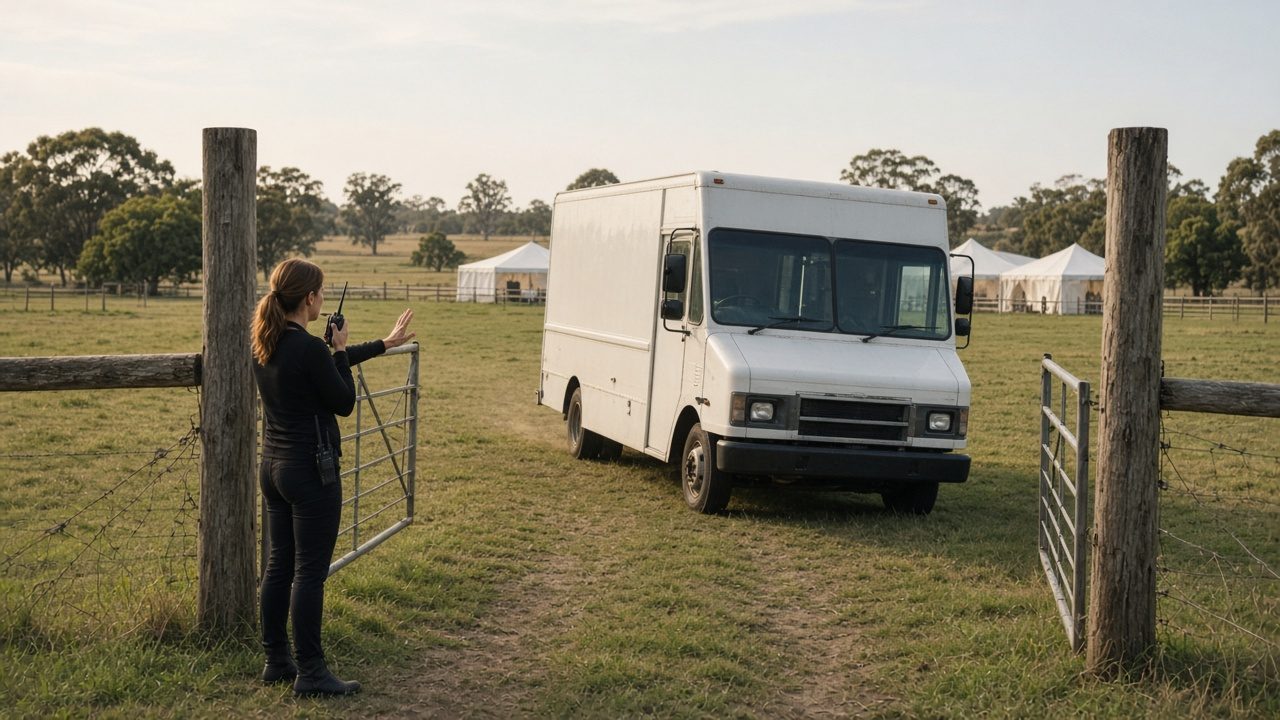
What a venue needs to host a food truck comes down to a few simple things: a way in, a safe place to park, somewhere for guests to queue, and the right power. Get those right and your truck will arrive, set up and serve without a hitch.
Key takeaways
- Check the whole route in: width, height, ground and turning space.
- Ask what power is available at the spot where the truck parks, not just "on site".
- Most trucks carry their own water and take wastewater away, but always ask.
- A one-page brief with photos gets you faster, more accurate quotes.
This checklist works for any event, whether it's a wedding, backyard party, work lunch or festival.
Got your venue details? Send them to trucks and get quotes.
Get free quotes from food trucksFree, no commitment. Quotes usually within 24 hours.
Access and clearance
Most problems on the day start before the truck even parks. Check the whole route from the street to the service spot:
- Width. Measure gates, driveways, laneways and paths.
- Height. Look for carports, awnings, branches, wires and car park height bars.
- Ground. Trucks are heavy. They need firm, level ground. Soft lawns, sand and steep slopes can be a problem, especially after rain.
- Turning. Tight corners or narrow streets may not suit larger trucks.
Take a few photos and send them with your inquiry. A picture with a car for scale is really helpful.
Parking, queues and safety
Choose a spot where:
- The truck is level and stable.
- Guests can queue safely, away from roads, driveways and moving vehicles.
- The queue won't block entrances, fire exits or paths.
- The service window faces your guests, not a wall or the road.
If the truck parks on the street, check local parking rules. On public land, you may need council approval. See our permits guide.
Power: ask about the exact spot
Many venues say "power on site" when they mean a standard outlet somewhere in the building. Food trucks have different needs. Some can run from a standard 15-amp lead, some need more, and many bring their own generator.
Ask your venue:
- What type of outlet is available where the truck will park?
- How far away is it?
- Is it shared with anything else, like a sound system or lighting?
If several trucks are coming, make sure there's enough power for all of them. Otherwise, some will need generators. Tell trucks what's available when you enquire.
Water, wastewater and rubbish
Most food trucks carry their own fresh water and take their wastewater away with them. Ask whether they'll need a tap, and never let wastewater go down a stormwater drain. Plan for rubbish too: put bins near the queue and agree who takes them away at the end.
Weather and a plan B
Australian weather can turn quickly. Plan for:
- Shade for the queue on hot days.
- Cover for guests if it rains.
- A firm, sealed spot for the truck in case the lawn turns soggy.
- Wind, which can affect awnings, so let the truck choose the best angle.
- Lighting if service runs after dark.
Write your plan B down and share it with the truck.
A one-page brief you can copy
Send this information with your inquiry:
- Event date, start time and service window.
- Full address and where the truck will park.
- Photos of the access route and parking spot.
- Gate width and any height limits.
- Ground type, such as concrete, gravel or grass.
- Power available at the parking spot.
- Guest count and dietary numbers.
- Your wet-weather plan.
- Council approvals, if any.
- An on-the-day contact.
On TruckEats, most trucks start at around $20 per head or a $2,000 minimum spend. Generators, travel and long setups may add to the quote. See how much food truck catering costs.
For official guidance on temporary events, see the NSW Food Authority's markets and temporary events page, Victoria's FoodTrader and Queensland Health's mobile food businesses page. For city-specific tips, read our Sydney and Melbourne checklists, or browse the directory.
Frequently asked questions
How much space does a food truck need?
Enough to park on firm, level ground, plus room for a queue and a safe way in. Sizes vary, so send photos and measurements.
What power does a food truck need?
It varies. Some trucks run from a 15-amp lead, others need more, and many bring a generator. Ask each truck.
Can a food truck park on grass?
Often, if it's dry and firm. After rain, a sealed surface is safer.
Do I need to provide water?
Usually not, as most trucks carry their own. Ask in case they need a tap.
What if the truck can't fit through my gate?
It may be able to park on the street or driveway and serve from there. Send photos so trucks can suggest options.
What happens if it rains?
Have a covered area for guests and a firm spot for the truck, and tell them your plan B in advance.
Can a food truck set up at an apartment building?
Sometimes. Car parks often have height bars, so the truck may need to park at street level or in a visitor area. Check building rules with management first.
Keep planning
Ready to brief food trucks on your venue?
Get free quotes from food trucksFree, no commitment. Quotes usually within 24 hours.